Documents, customs, deadlines, packaging: discover the key points to check when preparing an international sea freight shipment, anticipating potential issues and organising the transport of your goods.
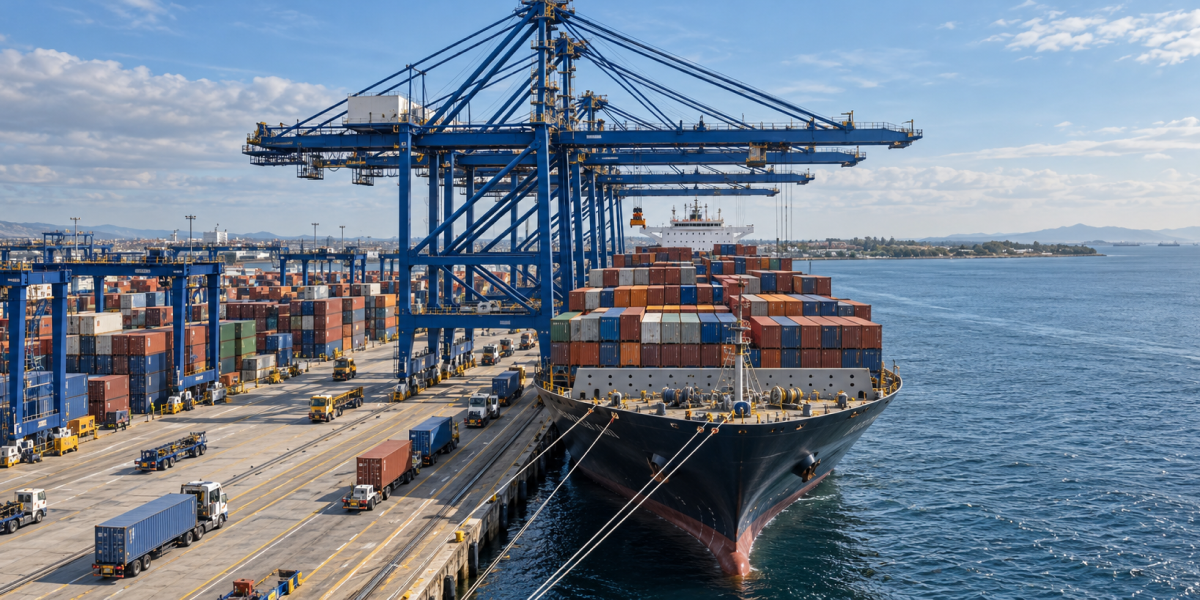
A successful sea freight shipment starts with careful preparation well before the vessel departs
Organising an international sea freight shipment involves more than simply booking a container or choosing a shipping line. Even before loading begins, several aspects need to be coordinated: the characteristics of the goods, commercial documents, customs formalities, deadlines and delivery conditions.
Missing information, inconsistencies in documentation or insufficient planning for deadlines can complicate operations and lead to additional costs.
For companies importing or exporting goods, thorough preparation is therefore essential to minimise the risk of unexpected issues.
What are the main steps to consider before an international sea freight shipment?
To prepare an international sea freight shipment effectively, it is essential to gather information about the goods, check transport documents and customs formalities, anticipate deadlines, ensure appropriate packaging and clarify the responsibilities of everyone involved. These checks help organise the shipment more efficiently and minimise avoidable difficulties.
1. Gather essential information about the goods
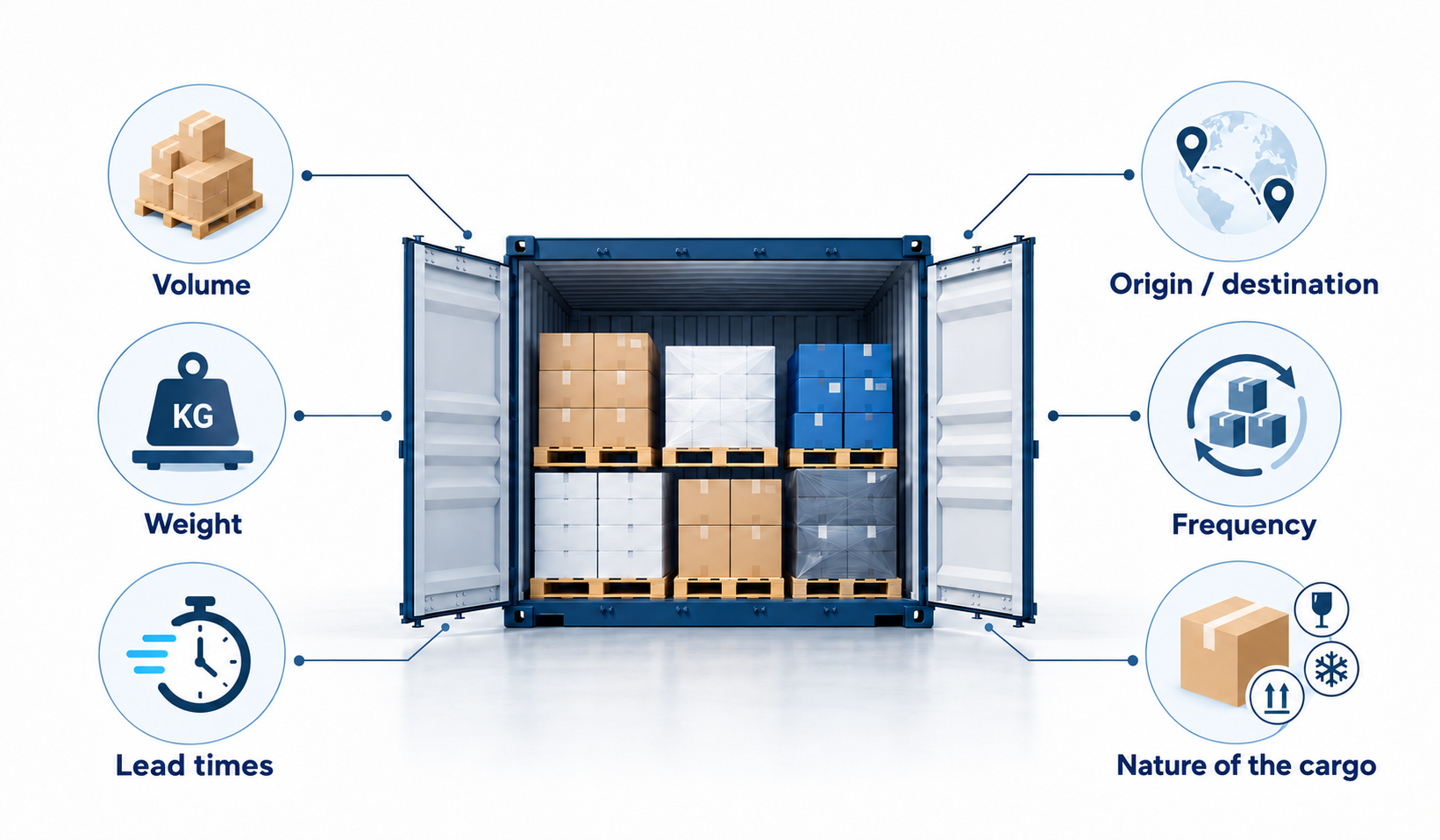
Preparation begins with an accurate description of the goods to be shipped. This information helps assess transport requirements and identify any specific constraints.
Key information to provide includes:
- the nature and description of the goods;
- the number of packages or pallets;
- the gross weight and dimensions;
- the total volume to be transported;
- the collection and delivery locations;
- the country of origin and country of destination;
- any specific requirements related to the nature of the products.
Depending on the characteristics of the shipment, additional information may be required, particularly when the goods are subject to regulatory requirements or special handling conditions.
This information also helps determine the most suitable loading solution.
FCL or LCL: a choice to consider from the preparation stage
FCL (Full Container Load) involves booking a container for a single shipment, while LCL (Less than Container Load) involves consolidating several shipments within the same container.
The choice depends on factors such as volume, weight, shipping frequency, destination and logistical requirements.
To learn more, read our article about the differences between FCL and LCL sea freight.
2. Prepare the necessary sea freight documents
Documentation is a key part of organising an international shipment.
The required documents vary depending on the country of destination, the nature of the goods, customs regulations and the terms of the commercial transaction.
Several documents are commonly used.
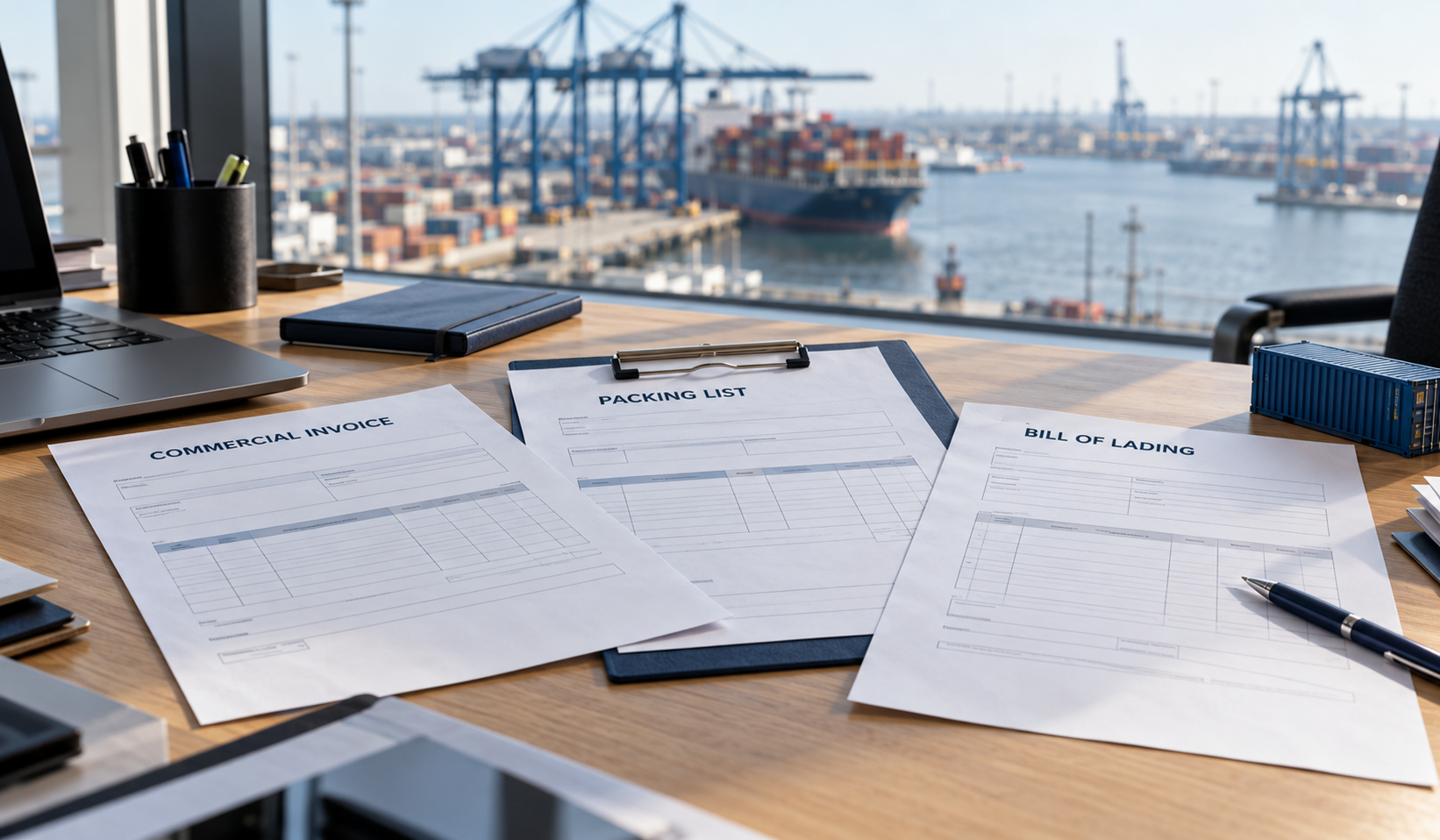
The commercial invoice
The commercial invoice identifies, among other things, the parties involved in the transaction, the goods sold and their value.
It may serve as a reference document for customs formalities. The information required depends on the country and the operations concerned.
The packing list
The packing list provides details of the shipment's contents, including the number and type of packages, weight, dimensions and other information useful for identifying the goods.
It must be consistent with the other commercial and transport documents.
The Bill of Lading (B/L)
The Bill of Lading, or B/L, is a sea transport document that can fulfil several legal functions, including providing evidence of the contract of carriage and receipt of the goods.
Depending on its form, it may also serve as a document of title to the goods.
Other transport documents, including sea waybills, may be used depending on the conditions of the shipment.
Additional documents
Depending on the products and countries involved, certificates of origin, licences, permits or other specific supporting documents may be required.
It is therefore important to check the requirements applicable to each operation rather than assuming that a single standard list of documents is suitable for every shipment.
3. Anticipate customs formalities for imports and exports
When a shipment involves goods entering or leaving the customs territory of the European Union, customs formalities may apply.
These require reliable information about the nature, origin, value and customs classification of the goods.
The companies concerned must also check their customs identification obligations, including the EORI number where required.
Depending on the operation, a customs declaration and supporting documents must be prepared in accordance with the applicable regulatory requirements and deadlines.
It is also important to distinguish between the formalities carried out at departure and those required at the destination.
At Garsou-Angenot, our Customs department handles import, export and transit operations. Depending on the shipment's requirements, this expertise can complement our sea freight services.
4. Plan for more than just the sea transit time
The sailing time between two ports represents only part of a shipment's overall transit time.
Several operations must be taken into account when planning:
- preparing and packaging the goods;
- transporting the goods to the loading location or port;
- deadlines for submitting documents and delivering goods;
- applicable formalities;
- port operations;
- sea transport and any transshipments;
- operations at the destination and final delivery.
Deadlines for delivering goods or submitting information, often referred to as cut-off times, depend on the carrier, terminal and booking arrangements.
These deadlines must be confirmed for each shipment.
It is also advisable to allow sufficient time according to the specific requirements of the shipment, as sailing schedules and port operations may change.
Depending on the shipment conditions, delayed documentation, exceeding free time allowances or poor coordination may result in additional costs, including port storage charges, demurrage or container detention charges. The applicable conditions and any free time allowances should be checked with the parties concerned.
An estimated transit time should therefore not be confused with a guaranteed final delivery date.
5. Check packaging, loading and weight requirements
Appropriate packaging helps protect goods during the different stages of handling and transport.
The characteristics of the cargo should guide the choice of packaging, protective materials and, where relevant to the planned operations, securing and lashing equipment.
For international shipments, solid wood packaging, including pallets, crates and wooden dunnage, may be subject to International Standard for Phytosanitary Measures No. 15 (ISPM 15). This standard requires appropriate phytosanitary treatment and official marking to limit the spread of harmful organisms between countries.
It is therefore important to check the compliance of the wooden packaging used and the requirements applicable in the country of destination whenever this standard applies.
For loaded sea containers, another specific requirement deserves attention: the verified gross mass, or VGM (Verified Gross Mass).
Under the applicable provisions of the SOLAS Convention, the gross mass of a loaded container must be verified and communicated in accordance with the required procedures before it is loaded onto a vessel.
This requirement contributes to the safety of maritime operations.
It is important to distinguish between the weight of the goods and the verified gross mass of the container, which also includes the container's tare weight.
The calculation, verification and communication procedures must be organised in accordance with the applicable regulations.
6. Clarify responsibilities using Incoterms®
Preparing an international shipment also involves clearly defining how responsibilities are divided between the seller and the buyer.
The Incoterms® 2020 rules, published by the International Chamber of Commerce, define the parties' obligations concerning delivery, certain costs, transport arrangements and the transfer of risks.
The chosen rule must be appropriate for the actual conditions of the commercial transaction.
Some rules are reserved for sea and inland waterway transport, while others can be used for different modes of transport, including multimodal operations.
However, Incoterms® do not replace the sales contract or any other agreements required for the shipment.
A clear division of responsibilities helps avoid misunderstandings about the services expected and the costs to be borne by each party.
7. Coordinate all parties involved to minimise unexpected issues
An international sea freight shipment may involve several parties: the shipper, consignee, freight forwarder, shipping line, inland transport providers, terminals and customs representatives.
The quality of the information exchanged and the coordination of operations play an important role in ensuring the transport process runs smoothly.
Before departure, several questions should be clarified:
- Who organises the collection of the goods?
- Who provides the necessary documents and information?
- Which deadlines must be met?
- Which formalities must be completed at departure and at the destination?
- Who is responsible for the different stages of transport?
- What procedures should be followed if information is missing or changes occur?
The aim is not to eliminate every possible uncertainty in sea freight transport, but to minimise avoidable difficulties through appropriate organisation.
Sea freight shipment: key points to check before departure
Here is a summary of the main points to consider when preparing an international sea freight shipment.
| Step | Points to check |
|---|---|
| Goods | Nature, weight, dimensions, volume, packaging and specific requirements. |
| Documents | Commercial invoice, packing list, transport document and any required supporting documents. |
| Customs | Applicable formalities, customs information and documents required for the operation. |
| Deadlines | Cut-off times, port operations, transit, transshipments and final delivery. |
| Loading | Packaging, securing and lashing, ISPM 15 compliance of wooden packaging where applicable, and VGM. |
| Responsibilities | Agreed Incoterms® rule, allocation of tasks and anticipated costs. |
| Coordination | Parties involved, deadlines, information sharing and change management. |
Thorough preparation cannot guarantee that unexpected issues will never arise, but it helps improve control over the documentary and logistical stages of the shipment.
Download your sea freight preparation checklist
To make preparing your next shipment easier, we have brought together the main points to check in a concise checklist that you can consult, print or share with your team.
↓ Download the checklist (PDF)Free download · Practical 2-page checklist
Garsou-Angenot supports your international sea freight shipments
Garsou-Angenot provides B2B sea freight solutions for both imports and exports, through FCL and LCL services.
The company works directly with shipping lines and relies on networks including AOP (Air & Ocean Partners) and Globalia Logistics Network.
It also has a dedicated Customs department, making it possible to consider handling the customs formalities associated with shipments, depending on the requirements of each case.
This combination of sea freight services and customs expertise allows us to assess how best to organise a shipment while taking its specific logistical requirements into account.
Are you preparing an international sea freight shipment?
Our Sea Freight team can assess your request based on the nature of the goods, volumes, destination and transport requirements.
Frequently asked questions about preparing a sea freight shipment
Commonly used documents include the commercial invoice, packing list and a sea transport document, such as a Bill of Lading or sea waybill, depending on the shipment. Customs declarations, certificates or permits may also be required, depending on the goods and countries involved.
A Bill of Lading is a document used for transporting goods by sea. It can serve as evidence of the contract of carriage and receipt of the goods. Its legal effects depend on the type of document issued.
The overall transit time includes more than just the sea crossing: preparation, inland transport, port operations, any applicable formalities and final delivery must also be taken into account. Planning ahead helps identify important deadlines and minimise certain unexpected issues.
VGM (Verified Gross Mass) refers to the verified gross mass of a loaded container. For containers subject to the SOLAS Convention requirements, this information must be obtained and communicated in accordance with the prescribed procedures before the container is loaded onto a vessel.
The Incoterms® 2020 rules help define certain responsibilities of the seller and buyer regarding delivery, costs and the transfer of risks. The selected rule must reflect the actual conditions of the commercial transaction.
Yes. Garsou-Angenot has a dedicated Customs department handling import, export and transit operations. This expertise can complement FCL and LCL sea freight services, depending on the shipment's requirements.
For an initial assessment, it is useful to provide information about the nature of the goods, their volume and weight, collection and delivery locations, destination, as well as any deadlines and specific requirements. Garsou-Angenot's Sea Freight team can then assess the most suitable transport solution.
Industry expertise
This article was prepared with the expertise of the Sea Freight department at Garsou-Angenot.
Technical review and validation: Laurent Davaine, Sea Freight department at Garsou-Angenot.