FCL or LCL? Discover the differences between these two sea freight solutions and the key factors to consider when choosing the best shipping option for your cargo.
FCL or LCL: two options for shipping your goods by sea
When organising an international shipment by sea, choosing the right container shipping option is an important step. Two solutions are commonly used for containerised transport: FCL (Full Container Load) and LCL (Less than Container Load).
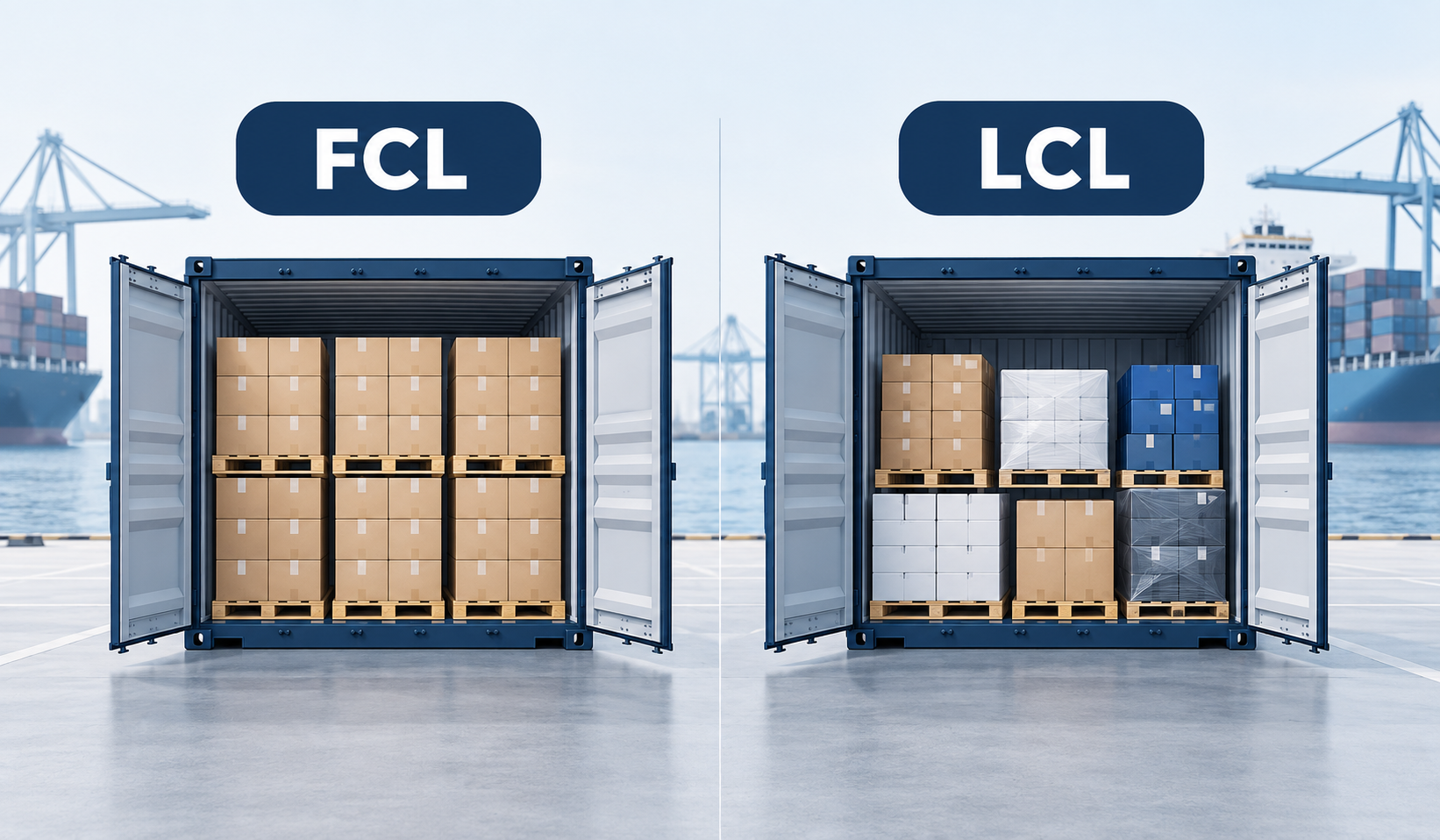
The principle is relatively simple: with FCL, a container is reserved for a single shipper's shipment. With LCL, several shipments are consolidated into the same container when each shipment occupies only part of the available space.
However, the choice does not depend solely on the volume of goods to be transported. Shipping frequency, transit times, the type of goods, handling operations and the overall transport cost must also be taken into account.
What is FCL shipping?
FCL stands for Full Container Load. With this type of shipment, the container is used exclusively for goods belonging to a single shipper.
This does not necessarily mean that every cubic metre of the container must be filled. The company reserves the container for its shipment, so the cost must be assessed in relation to the actual volume of goods transported.
When should you consider FCL?
FCL may be particularly suitable when:
- the volume of goods justifies booking an entire container;
- shipments are large or regular;
- the company wishes to avoid consolidating its goods with shipments from other shippers;
- the type of goods requires specific loading arrangements;
- an assessment of the total cost shows that a full container is more cost-effective than consolidated shipping.
What is the capacity of a shipping container?
As a general indication, a standard 20-foot (20') shipping container can accommodate approximately 11 Euro pallets, compared with up to 25 Euro pallets in a 40-foot (40') container. These capacities may vary depending on the dimensions, packaging and arrangement of the goods.
These figures help estimate the space required for a shipment, but the choice between FCL and LCL also depends on weight, transport costs and logistical requirements.
However, these capacities do not represent a threshold beyond which FCL automatically becomes the better option. Freight rates depend on factors such as the shipping route, origin, destination, cargo characteristics and market conditions.
A comparison should therefore be carried out for each individual shipment.
What is LCL shipping?
LCL stands for Less than Container Load. This solution allows companies to ship quantities of goods that do not justify booking an entire container.
Goods from several shippers are consolidated into the same container. Freight costs are generally calculated according to the volume and/or weight of the cargo, depending on the applicable pricing rules.
When can LCL be a suitable option?
This solution may be particularly appropriate for:
- cargo volumes that are too small to justify a full container;
- companies that prefer to split their supplies into smaller shipments;
- occasional or smaller-volume shipments;
- companies establishing a new international shipping flow;
- businesses wishing to avoid paying for an entire container when they would only use part of its capacity.
One of the main advantages of LCL is therefore the shared use of available container space.
However, LCL shipments require consolidation and subsequent deconsolidation operations. Depending on the procedures and routes involved, these steps may result in additional handling time compared with FCL shipping.
FCL or LCL: what are the main differences?
| Criteria | FCL | LCL |
|---|---|---|
| Principle | Container reserved for a single shipment | Goods consolidated with other shipments |
| Volume | Particularly suitable for larger cargo volumes | Particularly suitable for smaller cargo volumes |
| Pricing | Cost based on booking the container | Pricing generally based on volume and/or weight, depending on the applicable conditions |
| Consolidation | No LCL consolidation with other shippers | Consolidation and deconsolidation required |
| Shipping frequency | Suitable for large or regular shipping volumes | Allows shipments to be split into smaller consignments more easily |
| Final choice | Depends on the overall cost and shipment requirements | Depends on the overall cost and shipment requirements |
In summary
LCL is particularly suitable when the volume of goods to be shipped does not justify booking an entire container. FCL becomes relevant when volumes increase or when the characteristics of the shipment justify using a dedicated container.
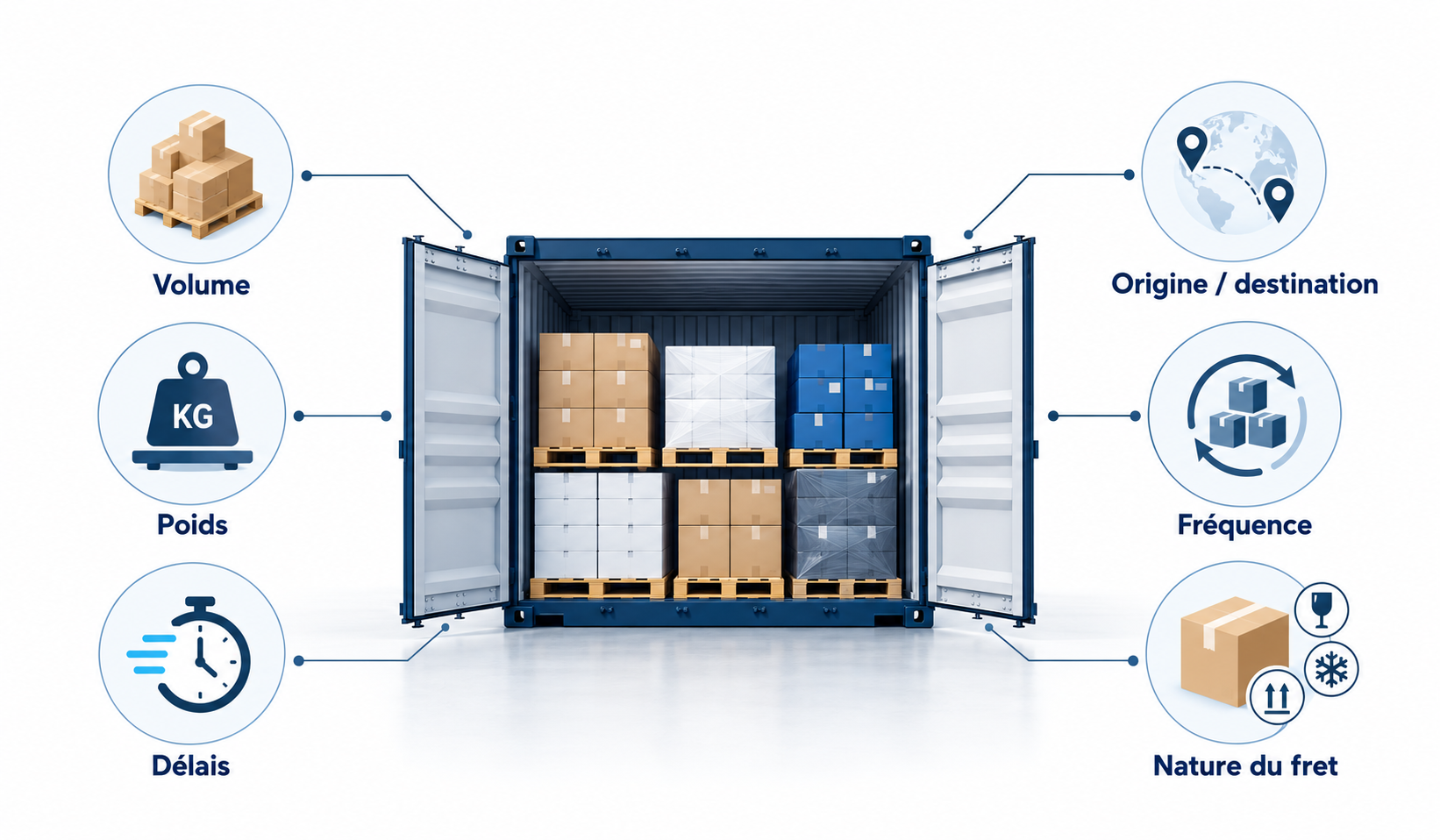
However, the best option should always be determined based on the actual shipment requirements: volume, weight, origin, destination, frequency, transit time and type of goods.
It is therefore advisable to avoid overly general rules such as "always choose FCL above X m³". The decision depends on several factors, and any volume thresholds should only be considered indicative.
What criteria should you compare before choosing between FCL and LCL?
Cargo volume and weight
These are naturally among the first factors to consider. Smaller quantities of goods may make LCL more suitable, while increasing volumes may justify comparing LCL costs with those of a full container.
Shipping frequency
A company may choose to consolidate its goods into a larger shipment or, alternatively, split its supplies into several smaller consignments.
LCL can support the latter approach without having to wait until there are enough goods to book an entire container.
Transit times and delivery deadlines
The sea transit itself is not the only factor to consider. With LCL, it is also necessary to account for the operations required to consolidate goods before departure and separate them at the destination.
It is therefore important to assess the total shipment lead time, rather than focusing solely on the duration of the sea journey between two ports.
The nature of the goods
Dimensions, weight, packaging, fragility and specific requirements can all influence how transport is organised.
Not all types of goods can necessarily be handled in the same way when shipped by LCL. Certain cargo categories require specific assessment (dangerous goods, food products, etc.) before they can be accepted for transport.
Origin and destination
The most suitable solution also depends on the available shipping routes, the ports involved and the consolidation options.
This is why the choice between FCL and LCL should be made based on the specific shipment rather than a general rule.
Do not overlook customs formalities
For imports or exports outside the relevant customs territory, sea freight arrangements must also be coordinated with the applicable customs formalities.
Garsou-Angenot has its own customs department and handles import, export and transit operations. The company also reports holding AEO Customs & Security certification and being integrated with the PLDA and NCTS customs systems.
Garsou-Angenot supports your FCL and LCL sea freight shipments
Garsou-Angenot provides sea freight solutions for B2B import and export operations, covering both LCL and FCL shipments.
The company works directly with shipping lines and maintains its independence when selecting routes. Garsou-Angenot is also a member of the AOP (Air & Ocean Partners) and Globalia Logistics Network networks.
This approach allows the most suitable solution to be assessed according to the specific characteristics of each shipment, rather than systematically favouring one shipping option.
Need advice on your sea freight shipment? Our Sea Freight team can help you choose between FCL and LCL based on your cargo volume, destination and logistical requirements.
Frequently asked questions about FCL and LCL sea freight
With FCL, the container is used for goods belonging to a single shipper. With LCL, several shipments are consolidated into the same container to share the available space.
No. LCL allows businesses to pay only for the capacity required for a smaller shipment, but the final cost depends on the volume, weight, route, consolidation operations and other transport-related charges. As cargo volume increases, it becomes necessary to compare the cost of LCL with that of a full container.
There is no universal threshold beyond which FCL becomes more cost-effective than LCL. As a general indication, a standard 20-foot container can accommodate approximately 11 Euro pallets, compared with up to 25 in a 40-foot container. However, these capacities do not represent a break-even threshold. The choice also depends on weight, origin, destination, available freight rates, the type of goods and required delivery times.
Yes. Garsou-Angenot's Sea Freight department handles both FCL and LCL sea freight shipments for import and export operations.
Yes. Garsou-Angenot has its own customs department, and its sea freight services also include the option of handling customs clearance.
Article produced with the expertise of Garsou-Angenot's Sea Freight department.
Content reviewed and approved by Laurent Davaine, Sea Freight department.